

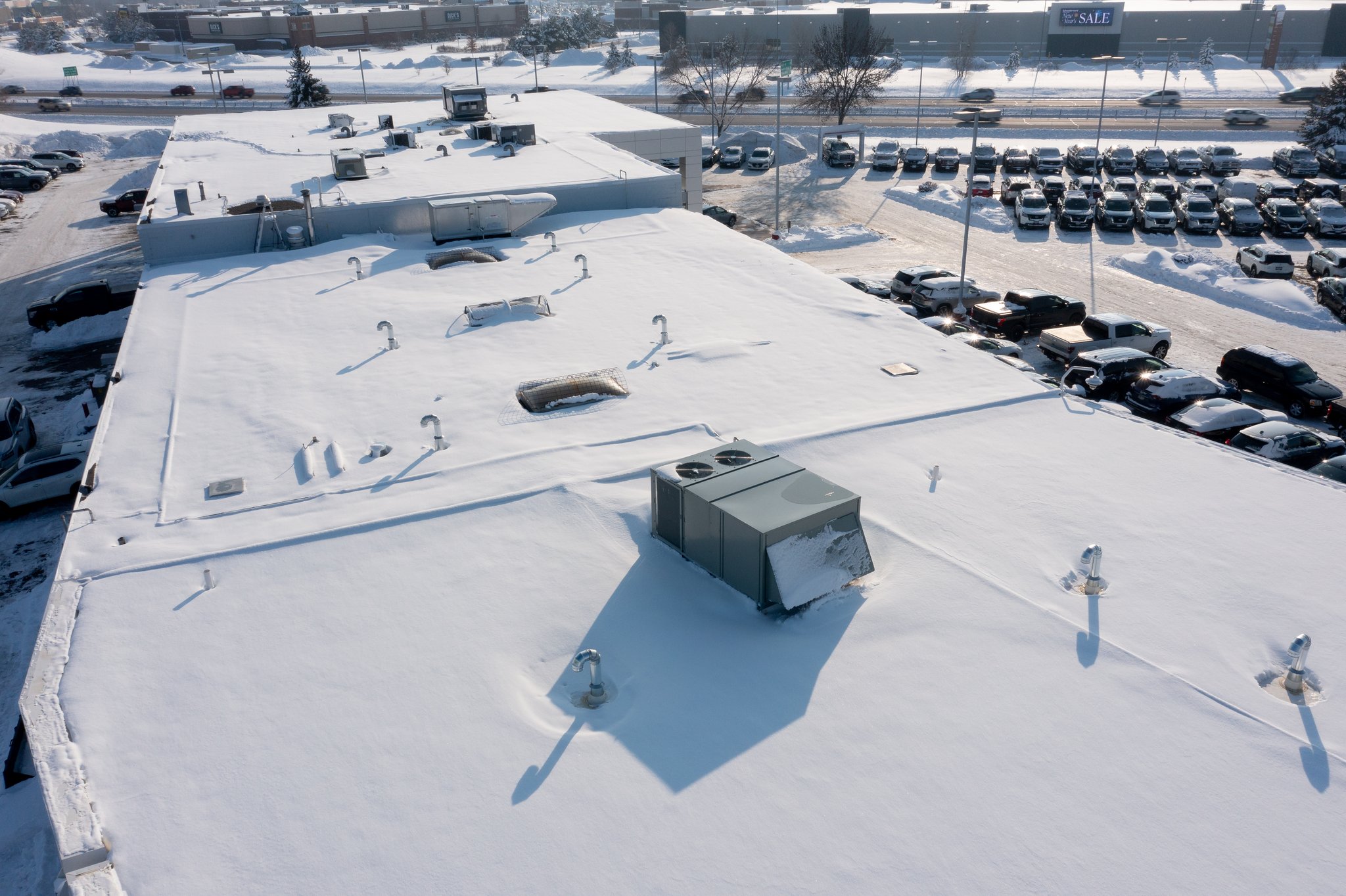
Now that winter is officially here, many commercial building owners and managers are considering the potential problems that may arise from the inevitable snow and ice buildup on their roofs.
While we tend to think of summer rainfall as the leading cause of roof leaks, winter weather can also pose a significant threat. Snow and ice are often more damaging than rain because they can create hidden issues that go unnoticed until it’s too late.
In this blog, we’ll discuss the causes of winter roof leaks and how to tell if you have a commercial roof leak in the winter months.
Causes of Winter Roof Leaks
Snow and Ice Buildup
One of the most common causes of winter roof leaks is the excess weight from snow and ice buildup. As snow accumulates on a roof, it can put a strain on the structure and cause damage to roofing materials.
Similarly, as temperatures fluctuate and snow melts and refreezes, ice dams can form, impeding proper drainage and allowing water to seep into the building.
During winter, temperatures often fluctuate, causing snow and ice to melt during the day and refreeze at night. This freeze-thaw cycle places significant stress on your commercial roof, and if it’s not properly constructed or maintained, it can cause leaks.
Snow buildup can also cause water to pool on the roof, which may eventually seep through weak spots or cracks. If you notice any unusual snow or ice buildup on your commercial roof, contact a professional roofing contractor immediately to assess the situation.
Damaged or Aging Roofing Materials
The age of your commercial roof and the materials used in its construction can also affect its resistance to winter leaks. As roofing materials age, they become more susceptible to damage from weather events such as snowstorms, ice storms, and heavy rain. Regular maintenance and inspections by your professional roofing contractor can help identify such issues before they become significant problems.
Clogged or Damaged Drainage Systems
Gutters, scuppers, drains, and downspouts are designed to move water off your commercial roof. However, during winter, they can become clogged with debris like leaves, twigs, and ice.
When this happens, water can back up and flow beneath the roofing material, causing leaks. Ice can also build up in the drainage system’s downspouts if they are mounted on the exterior of the building. This can cause components to separate from the structure, resulting in additional damage.
Inadequate Insulation
Another common cause of winter roof leaks is inadequate insulation or ventilation beneath the roof. This can create warm pockets of air that melt snow and ice on the roof, which refreeze as it moves into colder areas. This cycle can damage roofing materials and ultimately cause leaks.
What are the Signs of a Winter Roof Leak?
In some instances, you may not be able to spot signs of a roof leak from the exterior. However, any water stains or discoloration on your commercial building’s interior walls or ceilings may indicate a roof leak.
It’s essential to contact a professional roofing contractor to inspect your roof and identify and resolve the issue any time you suspect a leak. Delaying repairs can lead to further damage to your building’s structure, which can be costly to repair.
So, how do you know if your commercial roof leaks during the winter? Here are some signs to look out for:
- Water spots or stains on walls or ceilings
- Dripping sounds coming from the ceiling
- A musty smell in your building
- Mold growth on interior surfaces
- Buckling or warped walls, floors, or ceilings
- Peeling paint or wallpaper
- Water puddles on ANY floor of the building
If you notice any of these signs, act quickly and contact a professional roofing contractor for an inspection. Catching and resolving a roof leak early can save you money over time and prevent more significant issues.
Leaks Can Find Their Way Anywhere
Don’t assume you’ll only find leaks on the uppermost floor if you have a multi-level commercial building. Roof leaks often migrate to lower levels, making it challenging to identify the source.
Water can travel inside walls, down elevator shafts, or even through electrical wiring, causing damage to various areas of your building.
With gravity on its side, water will take the path of least resistance and find its way to the lowest possible point in your building. It’s not uncommon to dismiss water on a below-grade floor as something other than a roof leak. However, it is likely that it originated with the roof.
This is why it’s crucial to have a professional roofing contractor conduct a thorough inspection if you suspect your roof is leaking, to identify the source.
Prevention is Key
The best way to prevent winter roof leaks is to ensure your commercial roof is well-maintained year-round. Regular inspections and maintenance can help identify and address potential issues before they become major repairs.
It’s also a good idea to have a professional roofing contractor conduct a thorough inspection of your roof before winter to ensure it is prepared to withstand harsh weather.
You should also keep your roof clear of deep snow to prevent excess weight and the potential for ice dams. Local roofing contractors like Mint Roofing have crews that can be dispatched to remove accumulated snow and ice to reduce the risk of leaks.
Maintaining Your Roof Costs Far Less Than Repairing It
Commercial building owners and property managers need to stay vigilant in protecting their buildings’ roofs from winter weather damage.
By understanding the potential causes of roof leaks in the winter, such as temperature changes and snow buildup, damaged or old roofing materials, clogged gutters and downspouts, signs of water damage, and by conducting regular professional inspections and maintenance, you can avoid the costly repairs associated with roof leaks and prolong your commercial roof’s lifespan.
Contact a professional roofing contractor like Mint Roofing for assistance winterizing your commercial building’s roof and ensuring seamless operations throughout the winter months.
FAQs
Q: Can my commercial roof really leak when everything is frozen?
A: Absolutely. When snow and ice begin to melt during a warm-up, water looks for the path of least resistance, and any small vulnerability in your roof system can quickly turn into a leak. Even though the roof looks frozen and solid, those freeze/thaw cycles put extra stress on seams, flashings, and penetrations, making winter a prime time for commercial roof leaks.
Q: What are the most common causes of winter roof leaks?
A: The big culprits are freeze/thaw cycles, poor drainage, aging membranes, and issues around penetrations like HVAC units and vents. As snow melts and refreezes, ice can block drains and scuppers, causing water to back up and sneak under roofing materials, especially on flat or low-slope commercial roofs.
Q: How can I tell if my building has a winter roof leak?
A: Watch for stained ceiling tiles, dripping around light fixtures, damp walls, or that musty “wet” smell inside your building, even if you don’t see obvious water coming in. Outside, ice buildup around drains, unusual ponding on the roof, or icicles in odd places can be a red flag that water is getting trapped where it shouldn’t be.
Q: What should I do if I suspect a leak in cold weather?
A: Do not ignore it or wait for spring; even a small winter leak can quickly damage insulation, ceilings, finishes, and equipment inside your facility. Call a commercial roofing partner like Mint Roofing right away so a trained service crew can safely access the roof, locate the source, make repairs, and help prevent the issue from returning.
Q: How can Mint Roofing help me prevent winter leaks in the first place?
A: Proactive inspections and maintenance are the best defense: our team checks seams, flashings, drains, and penetrations before and during winter so issues are caught early, not after water shows up inside. Mint Roofing’s TopSite Preventative Maintenance program is designed to extend the life of your commercial roof, reduce emergencies, and keep your building dry through every Minnesota season—winter included.