

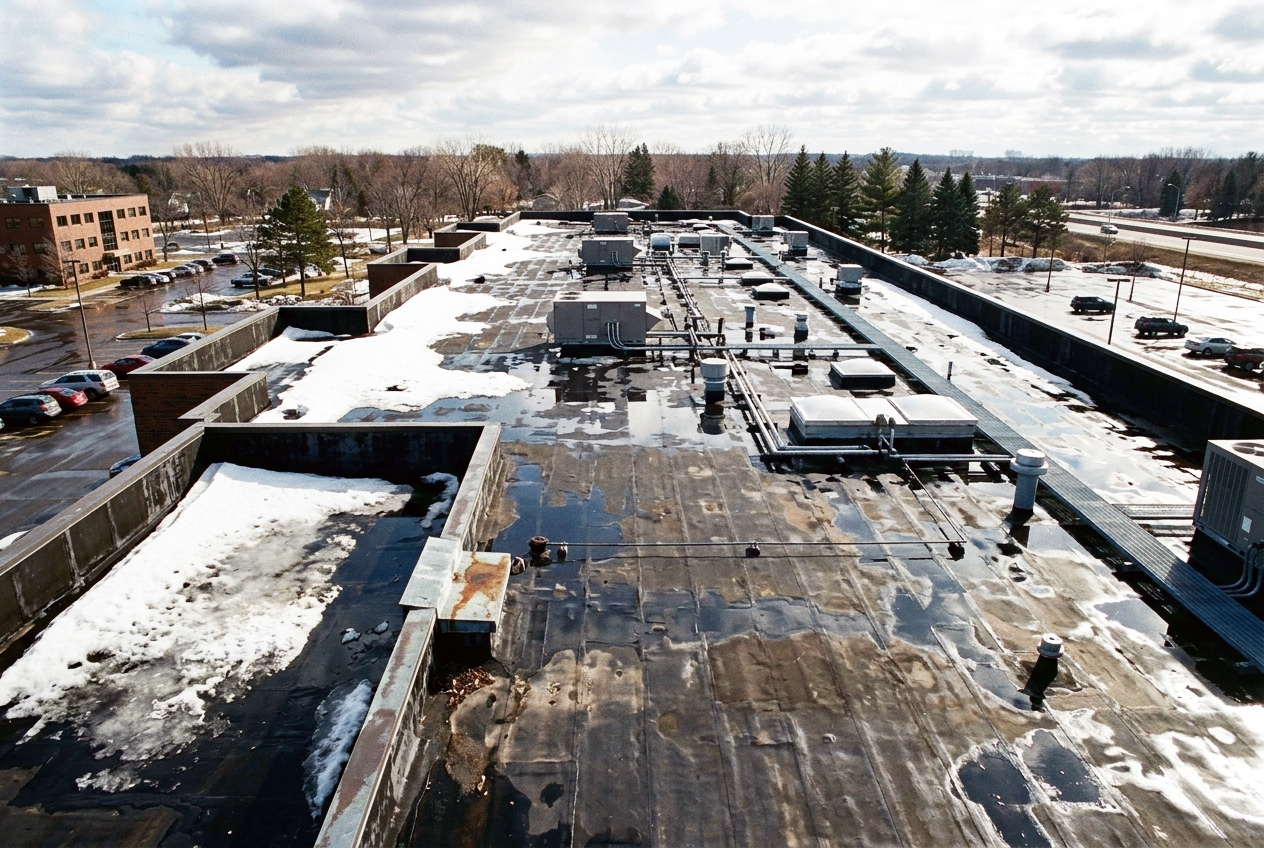
Minnesota winters are hard on commercial flat roofs, even in years when snowfall feels “average.” As the snow melts, ice loosens, and temperatures swing above and below freezing in a single day, your roof is quietly telling the story of what it just survived. Spring is when that story becomes visible.
For building owners and facility teams, a structured spring roof inspection and preventative maintenance plan is one of the most effective ways to protect budgets, operations, and warranties for the year ahead. Programs like a documented, recurring inspection service (such as Mint Roofing’s TopSite Preventative Maintenance Program) bring order to what can otherwise feel like guesswork every spring.
Why Minnesota Winters Punish Commercial Flat Roofs
Minnesota sees frequent freeze/thaw cycles from fall through spring, and each cycle puts stress on the roof system. Water finds its way into tiny gaps, freezes, expands, then contracts again, slowly prying open seams, flashing, and penetrations. Over time, that movement can loosen fasteners, open up membrane laps, and break down sealants.
On top of that, Minnesota often experiences some of its heaviest snowfall in March and even April. Heavy, wet “spring snow” can load a commercial flat roof far more aggressively than lighter, powdery mid‑winter snow. As that dense snow slowly melts and refreezes at night, it feeds ice dams, stresses drainage points, and forces water under flashings and edge details. Going into this late‑season period with a roof already weakened by earlier freeze/thaw cycles only increases the risk of leaks and damage.
What Spring Reveals After Snow and Ice
When the last piles of snow finally vanish from a flat roof in March or April, they often leave clues behind. Spring inspections frequently uncover:
- Ponding water around drains and low spots where snow sat for weeks.
- Membrane blisters or cracks along seams stressed by ice and temperature swings.
- Loosened or lifted flashing at curbs, walls, and penetrations.
- Damage around rooftop equipment where snow and ice were piled or drifted.
- Clogged or damaged gutters and downspouts that struggled with repeated refreezing.
In years when March and April storms dump heavy, wet snow, those clues can be even more pronounced. Ice dams at roof edges, parapets, and around drains can force water to back up under roofing materials, turning minor vulnerabilities into active leaks. That is why understanding your roof’s condition before and during this late‑season snow window is so important.
National manufacturers encourage owners to look for these issues as part of a structured maintenance routine. Johns Manville notes in its owner guidance that regular inspections and maintenance are expected as part of a sound roof management strategy and can be provided through contractor maintenance programs. This is not just a “nice to have”; it is part of how many systems are designed to be managed.
Why Spring Is the Ideal Time for a Flat Roof Inspection
A spring inspection in Minnesota does more than check for obvious leaks. It sets the stage for how your roof will perform through spring rains, summer storms, and the next winter.
Done well, a spring inspection should:
- Document what happened over the winter with photos, notes, and clear recommendations.
- Identify small repairs (such as sealant touch-ups or tightening fasteners) before they become interior leaks.
- Confirm that drains, scuppers, and gutters are clear and functioning ahead of heavy spring and summer rain.
- Provide a baseline condition report that supports manufacturer warranty requirements.
Because Minnesota’s snow season often extends into March and April, a spring inspection is not just about looking back; it is about looking ahead. Ensuring that your roof is in solid condition before heavy, wet spring snow hits helps reduce the risk of overloading, ice dam formation, and surprise leaks during late‑season storms.
Many property managers find that moving from ad‑hoc inspections to a recurring, preventative maintenance program brings measurable benefits. Proactive management has been shown to reduce repair costs over time, extend roof life, and provide better visibility into upcoming capital needs. A structured program also helps avoid the scramble of emergency calls during the first big spring storm.
The Role of Preventive Maintenance Programs in Freeze/Thaw Country
In a climate with as many temperature swings as Minnesota, preventative maintenance is not just about “catching leaks early.” It is about creating a repeatable process that:
- Schedules inspections at the right times of year (especially spring and fall).
- Tracks each roof’s condition over time, rather than treating every visit like a first visit.
- Captures photos and service history for budgeting, forecasting, and warranty documentation.
- Automatically prompts follow‑up on recommended repairs before the next winter.
Maintenance programs similar to Mint Roofing’s TopSite Preventative Maintenance Program often start with a detailed initial inspection, followed by a comprehensive, photo‑rich report, then recurring visits on an annual or semi‑annual schedule. That consistency matters in Minnesota, where a “quiet” winter on the ground may still have included dozens of freeze/thaw cycles up on your roof.
When a roof enters March and April already inspected, documented, and tuned up, it is better positioned to handle heavy, wet snow events and the ice dams that can follow. Proactive work on drainage, flashings, and known weak areas becomes an important layer of protection during those late‑season storms that routinely catch building owners off guard.
Johns Manville’s owner resources note that many leading contractors now offer formal maintenance programs that perform these checks for owners, helping them manage their roofs more like long‑term assets rather than unpredictable expenses. When those programs are local to Minnesota, they also factor in regional details such as ice damming, drifting patterns, and historical snow loads.
Spring Checkpoints for Minnesota Commercial Flat Roofs
Whether you manage one building or a portfolio, spring is the time to ask: “What did this winter do to our roofs?” A thorough spring inspection should, at a minimum, address:
- Membrane and Surfaces: Check for splits, punctures, blistering, and open seams where water can enter.
- Flashings and Terminations: Inspect bases of walls, curbs, and penetrations for movement, gaps, or failed sealant.
- Drains and Water Flow: Confirm that drains, strainers, scuppers, and gutters are clear and tested for flow.
- Roof Edges and Parapets: Look for loose edge metal, sealant failures, or signs of ice dam pressure.
- Rooftop Units: Examine areas around HVAC units, vents, and skylights where snow has piled up or ice has slid.
In late winter and early spring, it is especially important to verify that drains and scuppers remain open as snow melts during the day and refreezes at night. Even one clogged drain under a heavy, wet snowpack can create dangerous ponding and ice buildup, putting extra load on your roof structure and increasing the chance of leaks.
When these checkpoints are built into a structured program, findings are documented, prioritized, and tracked until resolved. That record becomes a powerful tool when budgeting for repairs or planning future roof replacement.
How a Program Like TopSite Supports Facility Managers Year‑Round
For Minnesota facility leaders, the value of a preventative maintenance program really shows up in three areas:
- Budget Predictability: Regular inspections and maintenance help prevent unexpected leaks and unplanned capital spending, allowing teams to plan roof work years in advance.
- Operational Uptime: Addressing small issues after winter, before busy seasons, reduces the risk of disruptive leaks over critical operations or tenant spaces.
- Warranty and Compliance: Many manufacturer warranties expect documented inspections and prompt repairs; organized programs make that easy to prove.
Spring is the natural anchor point for this cycle in Minnesota. Winter has revealed weak spots; thawing has exposed them; and there is still time to correct issues before warm‑weather storms and the next freeze season. At the same time, being prepared for heavy, wet March and April snow means your roof’s drainage, flashings, and overall integrity are ready for some of the year’s most demanding conditions. The result is not just a roof that is “patched for now,” but a roof that is managed intentionally across its full life.
Ready to Put a Spring Plan in Place?
If you own or manage commercial buildings in Minnesota, now is the right moment to schedule a spring roof inspection and get a preventative maintenance plan working for you. Mint Roofing’s TopSite Preventative Maintenance Program is built around Minnesota’s climate, with routine inspections, detailed photo documentation, and proactive recommendations that help extend roof life and reduce surprises. To get started, contact Mint Roofing and schedule your spring commercial roof inspection so your buildings are ready for the seasons ahead, including the heavy, wet snow events that often arrive just when everyone is ready for spring.
Spring Commercial Roof Maintenance FAQs
Q: Why are spring inspections so important for Minnesota commercial roofs?
A: Spring inspections reveal damage caused by snow loads, ice dams, and repeated freeze-thaw cycles common in Minnesota winters. Catching these issues early helps prevent leaks during spring rains and supports roof warranties, especially as the roof faces potentially heavy, wet March and April snow.
Q: What types of problems show up after a Minnesota winter on a flat roof?
A: Common post‑winter problems include open seams, cracked or lifted flashing, punctures from refrozen ice, ponding water, and clogged drains or gutters. In late winter and early spring, ice dams and overloaded drainage points from wet snow can turn these weaknesses into active leaks if left unchecked.
Q: How often should a commercial flat roof be inspected in Minnesota?
A: Most manufacturers and roofing professionals recommend at least one inspection per year in freeze/thaw climates: either in the spring after winter or in the fall before snow returns. In regions where heavy, wet spring storms are common, some owners also schedule targeted follow‑ups after major March or April snow events.
Q: How does a preventative maintenance program save money over time?
A: By finding and fixing small defects before they become major leaks, preventative maintenance programs reduce emergency repair calls, extend roof service life, and allow for planned capital projects rather than surprise replacements. The cost of one avoided late‑season leak during a heavy snow year can easily justify the investment in a structured program.
Q: What should I expect when enrolling in a program like TopSite?
A: You can expect an initial detailed roof inspection, a photo‑rich report outlining current conditions and priorities, and scheduled recurring inspections (often annually or semi‑annually) with documented repairs and recommendations. Many owners also appreciate having a trusted team they can call quickly if a March or April storm hits hard and they want eyes on the roof as soon as it is safe.
References
- Johns Manville Owner’s Manual (PDF): https://www.jm.com/content/dam/jm/global/en/commercial-roofing/brochures/JM-Owners-Manual.pdf
- Johns Manville technical and warranty services: https://www.jm.com/en/commercial-roofing/technical–guarantee–and-warranty-services/
- Mint Roofing TopSite Preventative Maintenance Program: https://mintroofing.com/preventative-commercial-roof-maintenance-top-site/