

Can Hot, Dry Weather Damage a Commercial Flat Roof?
Yes, hot, dry weather can contribute to deterioration of commercial flat roofs, although the effects vary depending on the roof’s age, material, installation quality, maintenance history, exposure, and existing condition.
Commercial roof systems are exposed to ultraviolet radiation, temperature changes, wind, rooftop traffic, moisture, snow, and freeze-thaw cycles throughout their service lives. Roofing guidance and industry research identify ultraviolet exposure and thermal cycling, or the repeated expansion and contraction caused by changing temperatures, as important environmental stresses on roof membranes and related components.
Hot weather does not automatically mean that a roof has been damaged. However, extended heat and sun exposure can accelerate the aging of vulnerable areas, including:
- Membrane surfaces.
- Seams and welds.
- Flashing.
- Sealants.
- Fasteners.
- Pipe penetrations.
- HVAC curbs.
- Roof coatings.
- Drain and scupper details.
That is why a roof inspection remains valuable even after a relatively quiet summer.
Why Less Rain Does Not Mean Less Risk
Most building owners notice roof problems when water enters the building. A ceiling stain, dripping water, wet insulation, or a bucket in a maintenance area creates an immediate reason to call a roofing contractor.
During a dry summer, however, small defects may not produce obvious symptoms. A vulnerable seam, deteriorated flashing detail, or damaged penetration may not be tested by significant rainfall for weeks or months.
This can create a false sense of security.
A commercial roof that has not leaked recently may simply not have received much rainfall. Once heavier storms return, existing weaknesses can become visible quickly. In some cases, the first significant fall rain may reveal conditions that developed gradually during the summer.
The important distinction is this:
No visible leak does not necessarily mean no roof problem.
A dry roof may still have aging materials, blocked drainage components, deteriorated sealants, or stressed details around rooftop equipment. Those conditions are easier and less disruptive to address before they become an interior emergency.
How Heat Affects Roofing Materials
Commercial flat roofs are designed to withstand changing weather conditions, but every roofing system has limits. During a hot, sunny day, exposed roof surfaces can become significantly warmer than the surrounding air. As temperatures cool overnight, the materials contract.
This repeated movement is known as thermal cycling. Over time, thermal cycling can place stress on seams, flashing, adhesives, fasteners, and membrane connections, particularly when components are already aged or damaged.
The impact is not identical for every roof. Different systems, including EPDM, TPO, PVC, modified bitumen, built-up roofing, and coatings, have different characteristics and maintenance requirements.
A professional inspection can help identify whether heat-related movement has contributed to:
- Open or weakened seams.
- Shrinkage or pulling at membrane edges.
- Cracked or brittle sealants.
- Loose or damaged flashing.
- Stress around penetrations.
- Deterioration near rooftop equipment.
- Surface wear or cracking.
- Areas where previous repairs may be failing.
These concerns may not cause a leak immediately. They can, however, reduce the roof system’s ability to withstand the next period of heavy rain, high wind, snow, and freezing temperatures.
Ultraviolet Exposure Continues During Drought
Rainfall is not the only weather factor affecting a commercial roof. Ultraviolet radiation from sunlight continues to reach the roof surface every clear day, whether or not precipitation occurs.
Long-term ultraviolet exposure can contribute to aging and changes in the physical properties of roofing materials. The National Roofing Contractors Association has identified ultraviolet radiation, thermal cycling, wind, hail, freezing, thawing, and other environmental conditions as factors that affect roof performance over time. GAF also describes roof-maintenance and restoration systems as providing additional protection against aging and UV exposure in appropriate applications.
During an inspection, a roofing professional may look for:
- Chalking or unusual discoloration.
- Surface cracking.
- Brittle membrane areas.
- Deteriorated coatings.
- Exposed reinforcement.
- Cracked sealants.
- Shrinking or stressed flashing.
- Open seams or weld concerns.
- Damage around pipes, curbs, and rooftop units.
Not every color change or surface imperfection indicates a serious roof failure. The purpose of an inspection is to determine which conditions are cosmetic, which require monitoring, and which should be repaired before they worsen.
Pay Attention to Rooftop Equipment
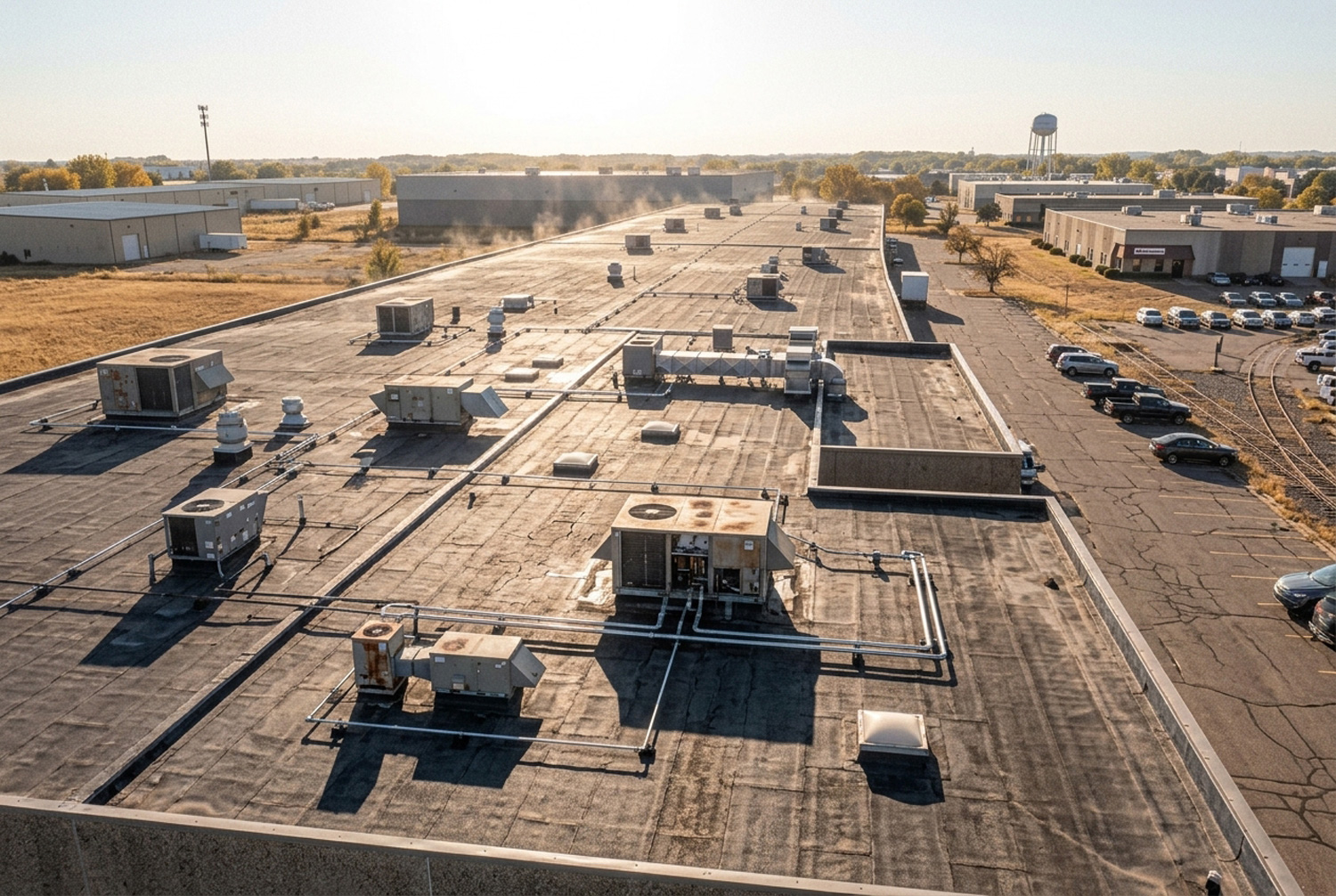
Commercial flat roofs often contain more than roofing membrane. HVAC units, vents, exhaust fans, pipes, skylights, access hatches, mechanical curbs, and other penetrations all create additional details that require careful installation and maintenance.
These areas can be especially important after a hot summer because different materials may expand and contract at different rates. Sealants can age, flashing can loosen, and previous repairs can become stressed.
Building owners and facility managers should pay particular attention to:
- Areas around rooftop HVAC units.
- Flashing at mechanical curbs.
- Pipe penetrations and pitch pans.
- Roof access doors and hatches.
- Exhaust fans and vents.
- Walk pads near frequently serviced equipment.
- Drains and scuppers.
- Areas where other contractors have worked on the roof.
A roofing contractor should evaluate the roof and its details as a system rather than looking only for visible holes in the membrane.
What Happens When Heavy Rain Returns?
A dry summer does not permanently remove the risk of water intrusion. When substantial rain returns, water may collect around drains, low points, penetrations, seams, and flashing details.
The first major rainfall after an extended dry period is a useful reminder to check interior areas that have experienced problems in the past. Building staff should look for:
- New ceiling stains.
- Damp insulation or interior wall areas.
- Drips near rooftop equipment.
- Water around mechanical rooms.
- Musty odors.
- Moisture near roof drains or exterior walls.
- New ponding or slow-draining areas.
A building owner should not wait for an active interior leak before arranging an inspection. Mint Roofing provides commercial roof inspections, repair services, preventative maintenance, and emergency service for commercial properties throughout Minnesota.
Five Steps to Take Before Fall
A practical post-summer roof review can help identify concerns before fall rain and winter weather arrive.
1. Schedule a Professional Roof Inspection
An inspection can identify defects that are difficult to see from the ground or from inside the building. Mint Roofing’s maintenance services include annual or semi-annual inspections and infrared technology to identify potential trouble areas when warranted.
2. Check Drains and Scuppers
Make sure roof drains, scuppers, strainers, and overflow routes are clear of leaves, debris, and other obstructions. Drainage problems can become more serious when heavy rain follows a long dry period.
Building staff should not walk onto a commercial roof unless they are trained, authorized, and equipped to do so safely. Roof surfaces may contain hazards that are not obvious from the ground.
3. Review Rooftop Equipment Areas
Look closely at flashing, curbs, penetrations, and sealants around HVAC equipment and other rooftop installations. These details should also be reviewed after work by mechanical, electrical, solar, or other contractors.
A small concern around a penetration can become a larger problem if it is exposed to heavy rain, high winds, freezing temperatures, and repeated winter weather.
4. Document Roof Conditions
Photographs, inspection reports, repair records, and maintenance notes can help building owners track changes over time. Good documentation can also make it easier to prioritize repairs and communicate with property managers, tenants, contractors, and insurers.
Documentation is particularly useful when several contractors access the roof during the year. It can help establish which work was performed, when it occurred, and whether any new penetrations or rooftop equipment were added.
5. Address Small Problems Before Winter
A minor flashing concern or a deteriorated seam may be easier to repair in mild fall weather than in a winter emergency. Early action can also reduce the likelihood of interior damage, business disruption, and more expensive corrective work.
The goal is not to replace a roof at the first sign of wear. The appropriate response may be routine maintenance, localized repair, restoration, or replacement, depending on the condition of the roof assembly.
The Bottom Line for Minnesota Building Owners
A hot, dry summer can make a commercial flat roof seem less urgent because there may have been fewer visible leaks. But heat, ultraviolet exposure, thermal movement, rooftop equipment, and deferred maintenance continue to affect the roofing system even when rainfall is limited.
The best approach is not to assume that a dry roof is a healthy roof. Instead, use the end of summer as a practical inspection point. Confirm that drainage is clear, evaluate vulnerable details, document the roof’s condition, and address manageable problems before fall storms, snow, ice, and freezing temperatures arrive.
If your commercial roof has not been inspected recently—or if you are unsure whether summer conditions affected it—contact Mint Roofing to schedule a professional evaluation and discuss an appropriate maintenance or repair plan.
FAQs – Frequently Asked Questions
Can Hot Weather Damage a Commercial Flat Roof?
Hot weather can accelerate commercial flat-roof aging by increasing exposure to ultraviolet radiation and to repeated temperature-related expansion and contraction. The impact depends on the roof’s material, age, condition, installation, and maintenance history. Heat alone does not prove that a roof has failed, but it is one reason to inspect seams, flashing, penetrations, coatings, and rooftop equipment.
Does Drought Affect Commercial Roofing?
Drought does not automatically damage every commercial roof, but prolonged dry, hot conditions can reduce rainfall-related leaks while leaving the roof exposed to sun, heat, wind, and thermal movement. A lack of visible leaks should not be treated as proof that a roof is unaffected. Professional inspection is the best way to determine whether maintenance or repairs are needed.
Why Should I Inspect My Commercial Roof If It Has Not Leaked?
A roof can have deteriorated seams, flashing, sealants, drains, or penetrations before water appears inside the building. Dry weather may simply mean that these vulnerable areas have not been tested by significant rainfall. An inspection can identify developing problems before they cause interior damage or require an emergency repair.
What Should I Check on My Commercial Flat Roof Before Fall?
Before fall, building owners should check whether drains and scuppers are clear, review areas around HVAC equipment and penetrations, look for damaged flashing or sealants, document visible changes, and arrange a professional inspection if the roof has not been evaluated recently. Building staff should avoid unsafe roof access and contact a qualified roofing contractor when concerns are present.
Can a Commercial Roof Leak After a Dry Summer?
Yes. A roof can leak after a dry summer if heat, ultraviolet exposure, aging, or previous damage has weakened seams, flashing, penetrations, or other details. Heavy rainfall may reveal those weaknesses even if the roof produced few or no leaks earlier in the season. Addressing concerns before major fall storms is generally preferable to waiting until an interior emergency occurs.
References
Minnesota Department of Natural Resources, “Drought Returns, Again.” Current Minnesota drought conditions and late-August 2026 overview: https://www.dnr.state.mn.us/climate/journal/drought-2026.html
Minnesota Department of Natural Resources, “Drought in Minnesota.” Drought definitions, current conditions, and statewide drought information: https://www.dnr.state.mn.us/climate/drought/index.html
National Roofing Contractors Association, “Evaluation of the Effects of Long-Term UV Exposure on Single-Ply Membranes.” Information about ultraviolet exposure and long-term membrane performance: https://nrca.net/roofingguidelines/Library/Detail?id=cTTCNS5Prps=
GAF, “Roof Asset Management and Maintenance.” Information about roof aging, UV exposure, maintenance, and restoration systems: https://www.gaf.com/en-us/plan-design/property-owners/roof-asset-management-maintenance
Mint Roofing, “Commercial Roofing Services.” Overview of Mint Roofing’s commercial roofing services: https://mintroofing.com/commercial-roofing-services/
Mint Roofing, “Commercial Roof Repair Services.” Information about commercial roof inspections and repair services: https://mintroofing.com/commercial-roofing-services/repair-services/
Mint Roofing, homepage. Overview of Mint Roofing’s commercial roofing, emergency repair, and service offerings: https://mintroofing.com/