

Why Small Roof Problems Become Big Expenses
Commercial roofs work hard. They are exposed to sun, heat, wind, rain, snow, ice, temperature fluctuations, standing water, foot traffic, rooftop equipment, and debris throughout the year.
Even a well-installed roofing system will eventually age. Seams can weaken, flashing can separate, drains can clog, membrane surfaces can wear down, and water can find a path into places it does not belong.
The trouble is that roof damage is not always visible from inside the building. By the time a water stain appears on a ceiling tile, moisture may already have moved through the insulation, decking, wall assemblies, or electrical areas. What began as a manageable repair can turn into a more complex restoration project.
That is why early detection matters. Addressing a loose flashing detail or a damaged membrane seam promptly is usually far less disruptive—and far less costly—than responding to a major leak during a storm.
Warning Signs Your Commercial Roof Needs Attention
Not every sign means your roof has failed. But every change is worth noting, especially after extended rain, severe weather, or a long stretch of freeze-thaw cycles.
Ceiling stains or interior water damage
Brown rings on ceiling tiles, bubbling paint, damp drywall, or discolored walls should never be ignored. These are among the most recognizable signs of a potential roof leak, although water can travel a considerable distance from its actual entry point.
If you see staining, do not assume the spot directly above it is the source. A professional inspection can help identify where water is entering, how far it has traveled, and what needs to be repaired before more damage occurs.
Ponding water
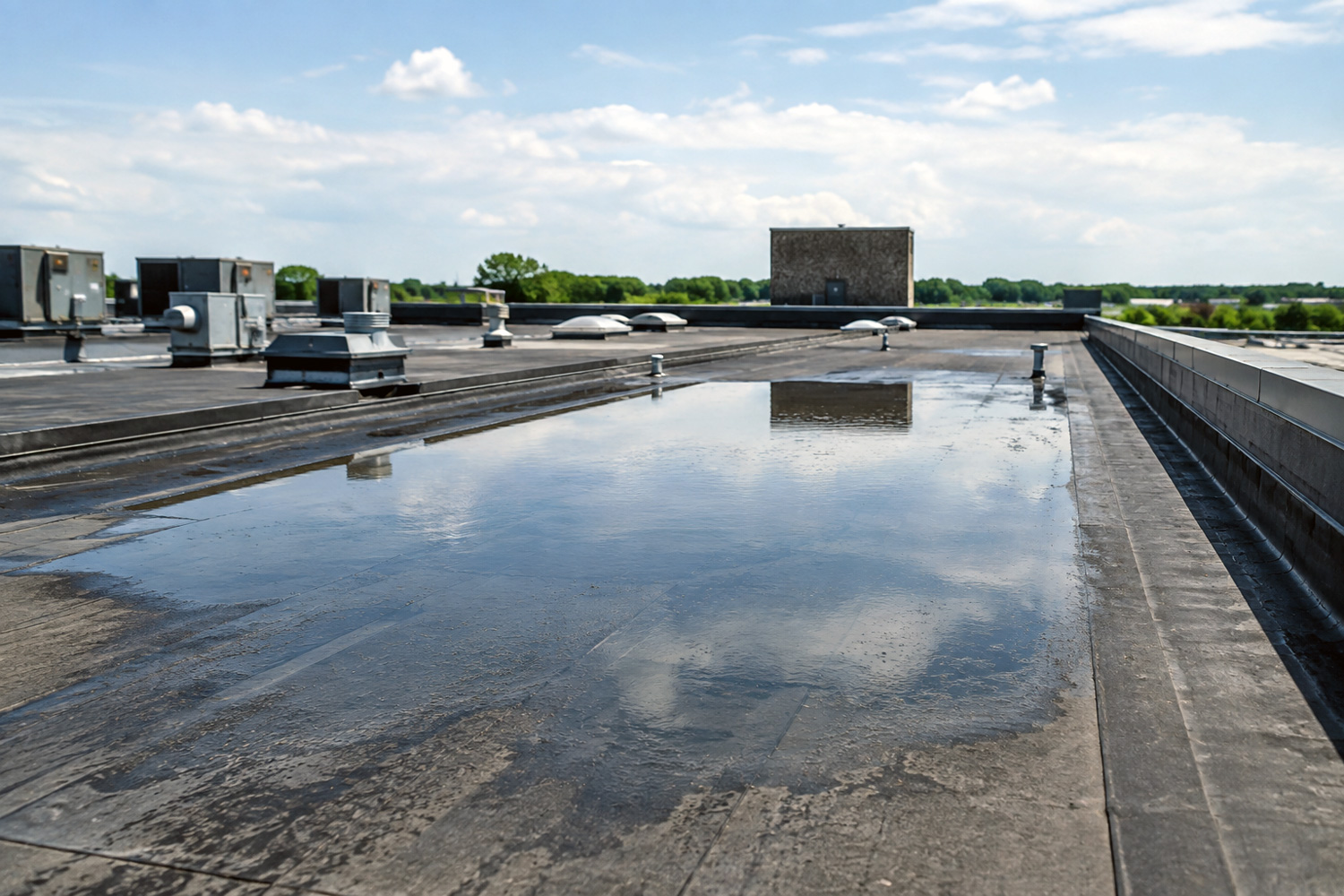
After rain, flat and low-slope commercial roofs may hold some water temporarily. But standing water that remains for more than about 48 hours can indicate a drainage issue, low area, clogged drain, or compromised roof design detail.
Ponding water accelerates wear on many roofing systems. It can add unnecessary weight, encourage debris buildup, stress seams, and create conditions where small vulnerabilities become larger ones. If water repeatedly collects in the same area, it is time to investigate why.
Damaged or deteriorating flashing
Flashing is one of the most important components of a commercial roofing system. It protects the vulnerable transitions around rooftop equipment, walls, curbs, penetrations, edges, drains, skylights, and vents.
When flashing cracks, lifts, pulls away, rusts, or loses its seal, water has an easy route into the building. Because flashing problems are often small at first, routine inspections can catch them before they create widespread moisture damage.
Cracks, blisters, bubbles, or open seams
A roofing membrane should perform as a continuous protective surface. Any split, puncture, blister, wrinkle, exposed substrate, loose edge, or separated seam deserves attention.
These conditions can result from age, weather exposure, installation issues, building movement, mechanical damage, or foot traffic around rooftop equipment. Even a small opening can allow water to enter beneath the membrane, where damage may spread without being obvious on the roof surface.
Clogged drains, scuppers, or gutters
Roof drainage is not glamorous, but it is essential.
Leaves, sediment, trash, roofing debris, tennis balls, nesting materials, and other obstructions can prevent water from moving off the roof as intended. A blocked drain does more than create a puddle. It can contribute to ponding water, overflow, ice formation, saturated insulation, and premature roof deterioration.
After storms and during seasonal maintenance, drainage areas should be checked and cleared safely. If your property has recurring drainage problems, a roofing professional can determine whether maintenance alone is enough or whether a longer-term correction is needed.
Unexplained energy-cost changes
A sudden increase in heating or cooling costs is not always a roofing problem. But when insulation becomes wet, or roof components deteriorate, the building envelope can lose efficiency.
If HVAC systems seem to be working harder than usual and no obvious cause has been identified, your roof may be one part of the larger picture. Moisture-compromised insulation does not perform as designed, which can affect indoor comfort and operating costs.
Loose rooftop materials or storm damage
High winds, hail, falling branches, and flying debris can damage a commercial roof in ways that are not immediately visible from the ground. After a significant weather event, it is wise to schedule an inspection—even if you do not see an active leak.
A post-storm assessment documents the roof’s condition and helps identify repair needs before the next weather event further exposes the weakness.
A Roof Inspection Is Not a Sales Pitch
One of the biggest misconceptions about commercial roofing is that calling a roofer automatically results in a recommendation for a full replacement.
That should not be the standard.
At Mint Roofing, our goal is to help you understand your roof’s actual condition and make an informed decision. Sometimes the right answer is a targeted repair. Sometimes it is ongoing maintenance. In other cases, restoration may extend the useful life of an existing system. And when replacement is truly necessary, you deserve a clear explanation of why, what options are available, and how the work can be planned around your operations.
A good roof assessment should provide practical information, not pressure. You should come away with a better understanding of the roof’s age, condition, vulnerabilities, repair priorities, and likely next steps.
The Value of Preventive Maintenance
Waiting for a leak is a reactive strategy. Preventive maintenance is a business strategy.
A regular commercial roof maintenance plan can help identify developing issues before they become urgent. It also creates a record of inspections, repairs, and roof conditions over time—information that can be useful for budgeting, warranty compliance, insurance conversations, capital planning, and property management.
A maintenance visit may include:
- Reviewing the roof membrane for wear, punctures, seams, and surface damage
- Checking flashing, penetrations, curbs, rooftop equipment, and perimeter edges
- Clearing and evaluating drains, scuppers, gutters, and downspouts
- Looking for signs of ponding water or drainage concerns
- Identifying areas affected by foot traffic or mechanical service activity
- Documenting repair recommendations and condition changes
The goal is not simply to “look at the roof.” It is to give you a reliable picture of what is happening before a hidden issue becomes an operational problem.
When to Schedule an Inspection
Commercial property owners should consider a professional roof inspection at least annually, and sometimes twice a year depending on the building, roof type, age, and exposure. Spring and fall are common times to assess conditions before and after the most demanding weather seasons.
You should also consider scheduling an inspection when:
- A leak, stain, odor, or moisture issue appears indoors
- Water remains on the roof long after rain has stopped
- Your building experiences hail, high winds, or storm debris
- HVAC or other rooftop equipment has been repaired or replaced
- You are buying, selling, refinancing, or planning capital improvements for a property
- Your roof is approaching the later portion of its expected service life
- You have not had a documented inspection in the past year
Protect Your Property Before the Emergency
The best time to deal with a roofing issue is before it becomes an emergency call.
Your commercial roof is a major investment and a critical part of your building’s protection. Paying attention to early warning signs gives you more choices: more time to plan, more opportunity to manage costs, and more control over the condition of your property.
If something about your roof looks different from before, trust that observation. A small change can be the first signal that your roof needs attention.
Mint Roofing is here to help you evaluate what you have, address what it needs, and make practical decisions that protect your building for the long term.
Frequently Asked Questions About Commercial Roof Warning Signs (FAQs)
What are the most common signs of a commercial roof leak?
Common warning signs include water stains on ceiling tiles or walls, peeling paint, musty odors, dripping water, wet insulation, or unexplained moisture around interior penetrations. On the roof itself, warning signs can include cracked or open seams, damaged flashing, punctures, deteriorated sealant, debris buildup, and water that remains in the same areas after rain.
It is important to act quickly. The visible ceiling stain is not always directly below the leak source because water can travel through insulation, decking, and structural assemblies before it becomes visible indoors. A professional commercial roof inspection can trace moisture paths and identify underlying issues before damage spreads.
How often should a commercial roof be inspected?
Most commercial properties should schedule a professional roof inspection at least once per year—typically in the spring or in the fall. Spring inspections help identify damage caused by snow, ice, freeze-thaw cycles, and winter debris, while fall inspections prepare the roof and drainage system for colder, wetter conditions.
Additional inspections are recommended after major hailstorms, high-wind events, prolonged heavy rain, rooftop-equipment work, or any event that may have damaged the roof membrane, flashing, or drainage system. Buildings with aging roofs, frequent roof traffic, sensitive operations, or complex rooftop HVAC equipment may benefit from quarterly inspections.
Is ponding water on a flat commercial roof a problem?
Yes, water that remains on a commercial roof for more than about 48 hours should be evaluated. While some temporary water accumulation can occur after a significant rainstorm, repeated ponding often indicates clogged drains, blocked scuppers, poor drainage, settlement, or low areas in the roofing system.
Standing water can accelerate membrane deterioration, place additional stress on seams and flashing, collect debris, and increase the likelihood of leaks. A roofing professional can determine whether the issue is primarily maintenance-related, such as a blocked drain, or requires drainage improvements or repairs.
What is roof flashing, and why does it matter on a commercial roof?
Roof flashing is the material and detailing used to seal vulnerable roof transitions—such as where the membrane meets a wall, parapet, drain, skylight, rooftop unit, vent, pipe, curb, or edge. These intersections are especially important because they are common areas for movement, weather exposure, and water intrusion.
When flashing becomes loose, cracked, corroded, separated, or poorly sealed, water can enter beneath the roof system even when the main membrane appears to be in good condition. Routine commercial roof maintenance should include a careful inspection of flashing, penetrations, edge metal, and sealants so minor weaknesses can be repaired before they cause interior damage.
Can a commercial roof be repaired, or does it need to be replaced?
Not every roof issue requires a full replacement. Many commercial roofing problems—including isolated punctures, open seams, damaged flashing, failed sealant, and drainage obstructions—can often be addressed with targeted repairs when caught early.
The best next step is a professional assessment of the roof’s overall condition, age, maintenance history, moisture exposure, and remaining service life. If the damage is localized and the roofing system is otherwise performing well, repair or restoration may be the most practical option. If deterioration is widespread, insulation is saturated, recurring leaks are affecting operations, or the roof is near the end of its useful life, replacement may be the more cost-effective long-term investment. Regular inspections give property owners more time and more options to plan for either outcome.