

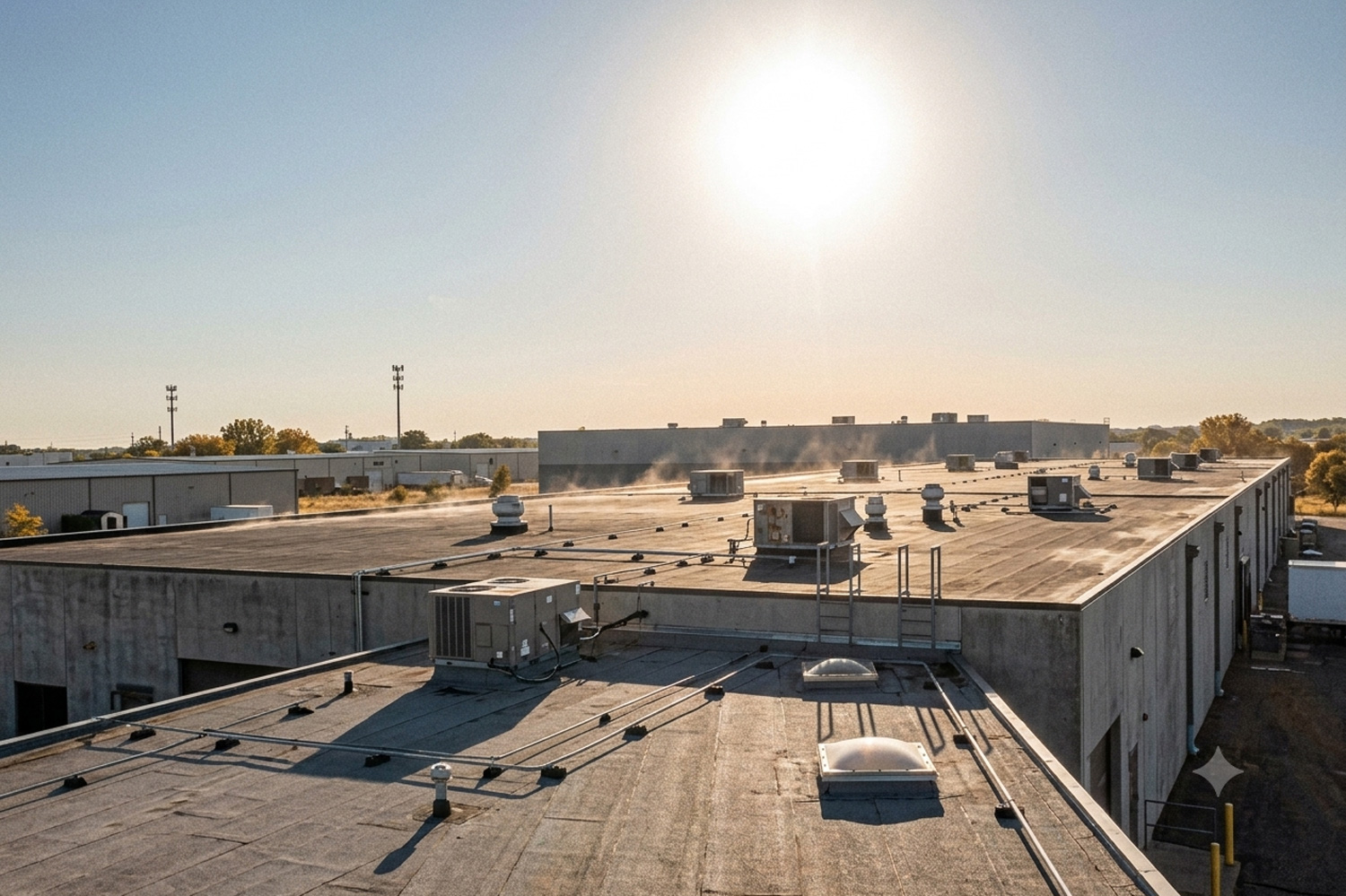
Why Extreme Heat Is Hard on Flat Roofs
On a hot Minnesota day, the surface of a commercial roof can become much hotter than the air temperature. That heat does not just sit on the surface. It causes roofing materials to expand during the day and contract again when temperatures cool at night. Over time, that daily movement creates stress at seams, flashing, penetrations, and transitions between different materials.
When the roof is already aging or has hidden moisture in the system, high heat can make small weaknesses show up faster. Blisters can form, seams can loosen, and sealants can begin to crack or separate. If a roof has any existing damage, a stretch of 90-degree days can push it closer to failure.
How Different Roofing Materials Respond
Most Minnesota commercial roofs are built with one of several common flat or low-slope systems, and each one reacts differently to hot weather.
TPO Roofs
TPO roofs are popular because they are reflective and energy efficient, but they still face stress during extended heat waves. High temperatures can cause expansion and contraction along seams, and if the welds are weak or the membrane is aging, the seams may begin to separate. Heat can also accelerate wear around rooftop penetrations, edges, and flashing details.
EPDM Roofs
EPDM roofs are durable and flexible, but prolonged heat and UV exposure can still dry out the system over time. The membrane itself may shrink slightly as it ages, which can pull on seams and flashings. That movement can lead to loosening around curbs, pipe boots, and wall transitions if the roof is already stressed.
PVC Roofs
PVC roofing can perform well in heat, especially when properly installed and maintained, but hot weather still puts strain on seams and accessory components. Adhesives, sealants, and flashing details can weaken faster during a long string of hot days, particularly if foot traffic or rooftop equipment is present.
Modified Bitumen Roofs
Modified bitumen roofs can be especially sensitive to heat buildup. The membrane can become softer in extreme temperatures, which makes it easier to mark, scuff, or damage. If a roof already has aging seams or areas of ponding, prolonged heat can worsen those weak points and make repairs more urgent.
Built-Up Roofing Systems
Built-up roofs can handle heat, but the surfacing, flashing, and bitumen layers still age under prolonged UV exposure. As materials dry out, the roof can lose flexibility, which increases the chance of cracking or seam failure around vulnerable areas.
Flashing and Sealants Are Often the First to Fail
Roof membranes are not the only thing to watch during hot weather. Flashing, sealants, adhesives, and caulking can all weaken when temperatures stay high for too long. These materials are critical because they seal the most vulnerable parts of the roof, such as roof edges, curbs, drains, pipe penetrations, skylights, and wall intersections.
When sealants dry out or flashing begins to pull away, water can find its way into the roof system during the next thunderstorm. That means a heat-related problem may not look urgent on a sunny day, but it can turn into a leak the moment rain arrives.
Foot Traffic and Rooftop Equipment Can Add Risk
Yes, foot traffic can increase the potential for damage on hot summer days. When the membrane is hot, it is often softer and easier to scuff, dent, or damage. Walking on the roof can stress seams, disturb sealant areas, and leave marks that become weak points over time.
Rooftop equipment can also create problems in the heat. HVAC units, curbs, supports, and service pathways all add pressure and create more opportunities for movement, vibration, and stress at flashing points. If maintenance work is necessary during a hot spell, it should be handled carefully and by someone who understands how heat affects the roof surface.
Warning Signs That Should Not Be Ignored
Some of the earliest warning signs of heat-related roof trouble are easy to miss. Building owners and facility managers should pay attention to stains on ceilings, peeling paint near roof lines, damp insulation, bubbling or blistering on the roof surface, separated seams, cracked sealant, and loose flashing.
If any of those signs show up, the roof should be inspected quickly. What looks like a small leak on the inside may actually be a larger problem in the roof assembly, and the longer it goes unchecked, the more expensive the damage can become.
A Recent Example From the Field
Recently, the Mint Roofing team was called to a three-story office building in the middle of a long stretch of 90-degree days. Building staff had noticed ceiling stains on one level of the building and suspected the roof may have been compromised near a rooftop mechanical unit.
After inspection, our team found heat-stressed flashing and deteriorating sealant around a penetration near the HVAC curb. The roof membrane had started to pull slightly at the detail, which created an opening that could have turned into a serious breach during the next heavy rain. Because the issue was caught early, we were able to make the needed repairs and reinforce the vulnerable area before the building’s interior structure and contents were exposed to expensive water damage.
That kind of situation is a good reminder that heat-related damage does not always look dramatic at first. Sometimes it starts with a small seam issue, a soft sealant line, or a loose flashing detail that only becomes visible when the roof is inspected closely.
Why Summer Inspections Matter
Hot weather is one of the best times to catch roof problems before they become emergencies. Inspections during summer can reveal membrane stress, dried-out sealants, weak flashing, and damage around rooftop equipment while conditions are still manageable. If a roof is already showing signs of distress, early repairs are almost always less expensive than waiting for a leak to spread.
For commercial properties, routine summer roof inspections are especially important because leaks can affect not only the roof system, but also insulation, framing, finishes, inventory, and business operations. A small problem discovered in July is far easier to deal with than a major interior repair in September.
Protecting Your Roof During Hot Weather
There are a few simple steps building owners can take to reduce the risk of heat-related roof damage. Limit unnecessary foot traffic, schedule inspections after long heat waves, keep rooftop drains and scuppers clear, and make sure any roof-mounted equipment is checked regularly. If you know your building has had leaks in the past, do not wait for the next rain to see whether the problem gets worse.
Commercial roofs work hard all year long, but weeks of extreme summer heat can expose weaknesses that were already there. The best way to protect the building is to catch those problems early, before heat and weather team up to make them worse.
Protect Your Roof Before the Heat Takes Its Toll
At Mint Roofing, we know how much Minnesota weather can ask of a commercial roof, and hot summer stretches are no exception. If your building has been sitting under weeks of 90-degree temperatures, now is a smart time to check for warning signs and schedule an inspection before a small problem grows into a bigger one.
Frequently Asked Questions (FAQs)
Can extreme heat really damage a commercial roof?
Yes. Prolonged heat can cause roofing materials to expand and contract, dry out sealants, loosen flashing, and worsen existing weak spots. Over time, that stress can lead to leaks or membrane failure.
Which flat roof materials are most affected by hot weather?
All flat roof systems can be affected, but TPO, EPDM, PVC, modified bitumen, and built-up roofing each respond differently. Heat can stress seams, cause shrinkage, soften membranes, or dry out sealants depending on the material.
Does walking on a hot roof increase the risk of damage?
Yes. Hot membranes are often softer and more vulnerable to scuffing, stress, and seam disturbance. Foot traffic should be limited when possible, especially during periods of extreme heat.
What are the warning signs of heat-related roof problems?
Common warning signs include ceiling stains, damp insulation, bubbling or blistering on the roof surface, cracked sealant, separated seams, and loose flashing. If you notice any of these, the roof should be inspected promptly.
Why should commercial roofs be inspected during hot summer months?
Summer inspections can reveal heat stress before it turns into a major leak. Catching small problems early helps prevent expensive damage to the roof system, the building interior, and the contents inside.